WHY YOU FEEL STUCK IN ANXIETY AND "LET DOWN" BY CARE AND COPING STRATEGIES
You've been managing your anxiety. That's a huge mistake.
Managing keeps you in it - Releasing gets you out.
This system releases the root of your anxiety, lowering it week by week, session by session.
Created by a doctor with 34 years in practice. 30 day guarantee
You know the feelings...
Racing thoughts that won't be quiet.
Chest tightness.
The knot in your stomach...
When you think about how anxiety sticks with you and affects every part of your life: sleep, relationships, work.
It can feel impossible to see a way out.
Why nothing has worked...
We get stuck because most advice focuses on the wrong thing.
Managing our feelings.
This makes sense on the surface because anxiety is intense, it grabs our attention with how it feels: buzzing, tension, worry, and frustration. And all we want is for it to stop.
The Problem?
When you focus on managing how you feel, that blinds you to where you truly need to put your attention in order to lower your anxiety.
GET IT NOW FOR $37

First month $37 - $99/month after, cancel at any time. We even email you before your renewal.
anxiety Lowers when you stop managing & start releasing
The cause of anxiety is stuck in your body as the memory of something painful in your past.
I have people say "But that happened years ago, it can't still be bothering me, can it?"
Oh yes it can!
Your body keep track of EVERY painful moment you had and keeps replaying it, over and over which feeds your anxiety.
To start lowering your anxiety, asking yourself this question...
What was happening in my life when my anxiety started?
I've found that every one of my patients with anxiety had pain in their past.
Once you become aware that the major reason for your anxiety is past pain, your mind and body switch from managing anxiety to "I know my past pain is causing it, now how do I get rid of it?"
You Release...
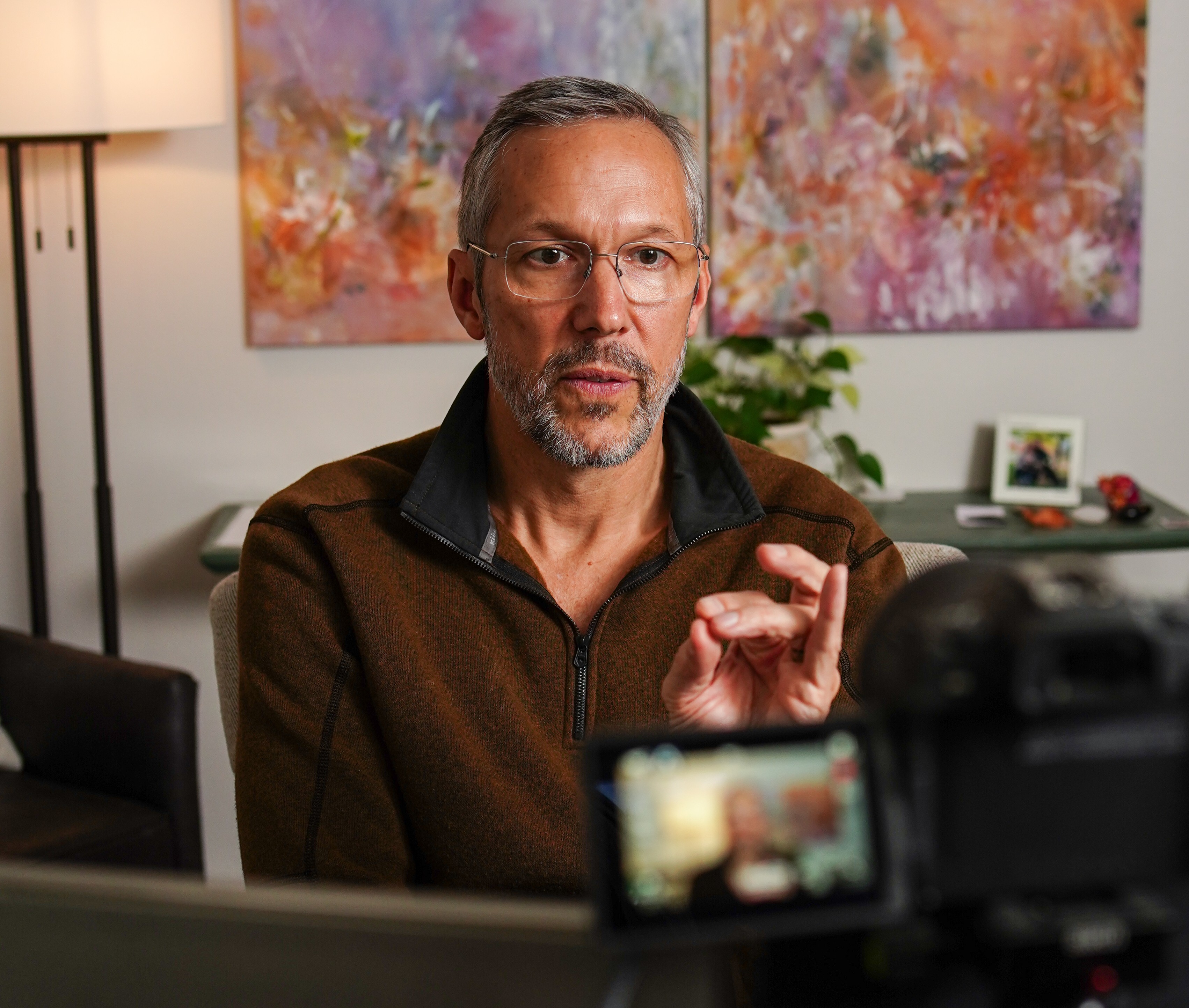
Release is like untying a knot. You cannot yank on the knot that is all your pain from the past, that tightens it up and make it more knotted.
Instead, we find a loose strand that is a pain from your past that is ready to release right now, and we work that until it releases. Then we work another strand and another...
Releasing is a process. You have to release the past that is ready to let go then a deeper part comes to the surface and we release that, and we keep going, again and again and as you release, a cool thing happens...
Your knot of past pain shrinks and your anxiety gets softer and you feel calmer because you've released the underlying cause that was feeding your anxiety.
The A.R.T of Healing Anxiety
3-Part Anxiety Release System You Can Start Today
A
AWARENESS
You cannot release an anxiety knot you cannot see
Module 1
OBSTACLE
"I've seen doctors, been in therapy, read the books. I still don't know why I'm anxious and I'm stuck with it."
THE SOLUTION
Module 1 creates Awareness that shifts you from "I have anxiety and don't know how to get rid of it", to "I know where to focus so I can release what's making me anxious."
Awareness sets your foundation for maximum results during Release in Module 2 & 3.
R
RELEASE
You loosen the anxiety knot one strand at a time
Module 2 & live Weekly Healing Sessions
OBSTACLE
"I've done programs and gotten care and I still have anxiety. I cannot handle spending money on something that let's me down again."
THE HONEST ANSWER
Most advice and self care misses releasing the pain from your past.
I cannot promise you specific results but in this course are the releasing methods that 86% of my members said helped them.
AND I give you a 30 day money back guarantee for a full refund of your first month's membership if you are not happy.
Release is where the magic happens. You get a daily release routine with a weekly deep dive release that together gets the whole knot loose, faster.
T
TRANSFORMATION
You becoming anxiety free
OBSTACLE
" I want to feel better, I'm skeptical, and I don't want to be stuck in a subscription that is hard to cancel."
THE HONEST ANSWER
Transformation is a process of doing A.R.T cycles over and over. Some people need support for 3 months and others need support for a year or more.
This program is super easy. You stay in it until you are as anxiety free as you want to be, then you cancel at any time and it's even easy to cancel.
At $37 for the first month you get the complete program with 4 live release sessions and if you are not happy, cancel it. We even email you a week before your renewal so you know it's coming.
Transformation is what happens when you release enough for the whole knot of your anxiety to come free.
The A.R.T. program
Module 1: Awareness = Control
Stop having anxiety ruin your day, take control of it.
How discovering the root of your anxiety begins to soften it.
2 Awareness exercises that set the foundation for releasing your anxiety.
Module 2: Guided Release - Your Daily Release Routine
Daily healing time where release happens.
A daily 30 minute release routine that unties the knots of pain feeding your anxiety.
Create an easy to use self care plan that nurtures you, because you deserve it.
Module 3: Live Weekly Release Sessions Every Wednesday @ 3pm PST
Your weekly deep dive into releasing the deeper, hidden parts of your anxiety.
Weekly live release sessions go deep, to the root, untangling the tough parts that keep anxiety stuck.
Lower anxiety faster by doing live release sessions with your daily release routine from module 2.
Access to recordings of all past sessions so you can watch any release session at any time for healing that fits your schedule.
Module 4: Emergency Relief TooL
A 2 minute tool to calm anxiety spikes. Help when you need it NOW!
Discover an easy to use tool for calming intense anxiety episodes.
For when you need relief during the rough and triggering times.
Module 5: 1:1 Visit with Dr. Steve
A FREE 20 minute 1:1 consult with Dr. Steve after your 3rd month of membership.
BONUSES
Q&A calls with Dr. Steve. Group calls each month to connect, answer your questions, and do even more live healing.
Bonus healing sessions from Dr. Steve's overall healing group. Because who doesn't want all the support they can get?
JOIN NOW FOR $37
First month $37 - $99/month after, cancel at any time, we email you before your renewal.
Get Full Access Right Away

anxiety relief success
Here's Everything You Get for $37
3 focused healing modules designed to transform you to be anxiety free.
Emergency relief tool for support when you want to be soothed, NOW.
Live weekly release sessions to go deeep into anxiety release.
Q&A calls, a supportive community, bonus healing sessions, and a library of all past healing sessions.
Free 20 minute visit with Dr. Steve to talk about anything you want (after 3rd month membership).
$37 Today
$37 for 1st month then $99/month - 4 live healing sessions each month, Q&A calls, 1:1 visit with Dr. Steve.
Stop staying anxious and do this.
product guarantee
I built General Anxiety Relief to get results, not waste your time with more bad advice and being stuck.
That's why your investment is fully protected by my guarantee:
If you go through the training, use the tools, and do your healing routine, and you still don't feel it was worth $37, shoot me an email within 30 days and I'll give you a full refund. No drama, no hoops.
All I ask is that you show me you gave it a shot because I know if you follow my system, you will walk away with some benefit.
This is about healing and about finally getting free of your anxiety.
frequently asked questions
Do I need any experience before starting?
NO! You do not need any experience for this program to help. All you need is to go through the course, beginning to end, create your healing routine and do the weekly live sessions. And if you have any questions the community is there to help you out.
How long until I see results?
I talk about this extensively in module 4 of the training and some people see results after their first healing session by feeling more calm overall.
Others it takes a few weeks of healing sessions to feel improvement.
Then a few people may take 2 months to see results or they will need deeper support like I lay out in Module 4.
How does this program work?
We all have positive patterns and negative patterns in us. Positive ones are memories that make you happy, build confidence, make you feel loved, and lead to good health mentally, emotionally, and physically.
And we have negative patterns, the ones that are painful and limiting. These are the ones we want to release because they make you anxious, angry, depressed and create difficulty in your life.
This program uses healing frequencies, guided meditation, energy medicine, and your own awareness packaged into a release routine you do at home and weekly live release sessions, all to release the negative patterns so they no longer create your anxiety.
What if I'm in therapy or taking medication?
This program is designed to complement your other care. Keep working with your therapist and taking your medication. This program is an additional tool, not a substitute for professional medical or mental health treatment.
What if my anxiety is really severe?
Get started with this program right away so that you have a healing routine you are doing every single day.
And, make sure you have support. Do you need professional support? Do you have a community you can lean on?
You will have the community inside this program and you will have module 4 where I talk about what to do if you have a tought case of anxiety or heal slowly. I will be here to support you.
What if it doesn't work for me?
No matter how great I think this program is and how amazing the care I give is, it doesn't work or feel right for everyone.
That's why you're covered by a 30 day money back guarantee. if you go through the program and don't feel it was worth your investment, email me for a full refund - [email protected]
Is this a one time purchase?
Yes and NO. You pay the discounted price for the complete program and first month of your live weekly healing sessions. Then, if you are happy, you continue your membership at $99/month to keep getting the live weekly healing sessions, live calls with Dr. Steve, private access to Dr. Steve, and you CAN CANCEL AT ANY TIME.
We hate those annoying ongoing monthly fees that are a pain to cancel and that you forget about in your busy life. To make your healing with us easy and wonderful we email you a week before your membership renews so that you know when your membership charge is coming up and if you are happy, you keep going and when you feel so much better that you do not need the healing support, you cancel your membership and go enjoy your anxiety free life.
NOW FOR ONLY $37
Get Anxiety Relief For $37
Bonuses Will Be Delivered Instantly. Get Full Access Right Away.
Copyright © 2026 | Dr. Steve's Healing Space | All Rights Reserved
Privacy Policy | Terms of Service